
Renee Lile - "Occupancy & Infestation: Ecological Drivers of Bat and Parasite Community Structure and Diversity"
"I am deeply grateful to receive the Biodiversity Graduate Student Enhancement Grant. The support of the Biodiversity Institute will allow me to complete my research analysis as I enter the final year of my PhD program. This grant will fund the hiring and training of a part-time research technician, as well as cover costs associated with publication and open data sharing."
Renee Lile, Ph.D. Student
2026 Recipient of the Biodiversity Institute Graduate Student Excellence Grant
Department of Zoology and Physiology
Program in Ecology and Evolution
Graduate Advisor: Riley Bernard and Ian Abernathy
My research examines how white-nose syndrome (WNS) — an invasive fungal disease — has reshaped bat communities in the Black Hills of South Dakota, and how the bats that have survived its arrival interact with the parasites they carry. My dissertation work pursues three goals: (a) tracking changes in bat species diversity and community composition following the introduction of WNS; (b) cataloging the external and internal parasites associated with these bats; and (c) identifying which host characteristics and environmental conditions best predict parasite burden.
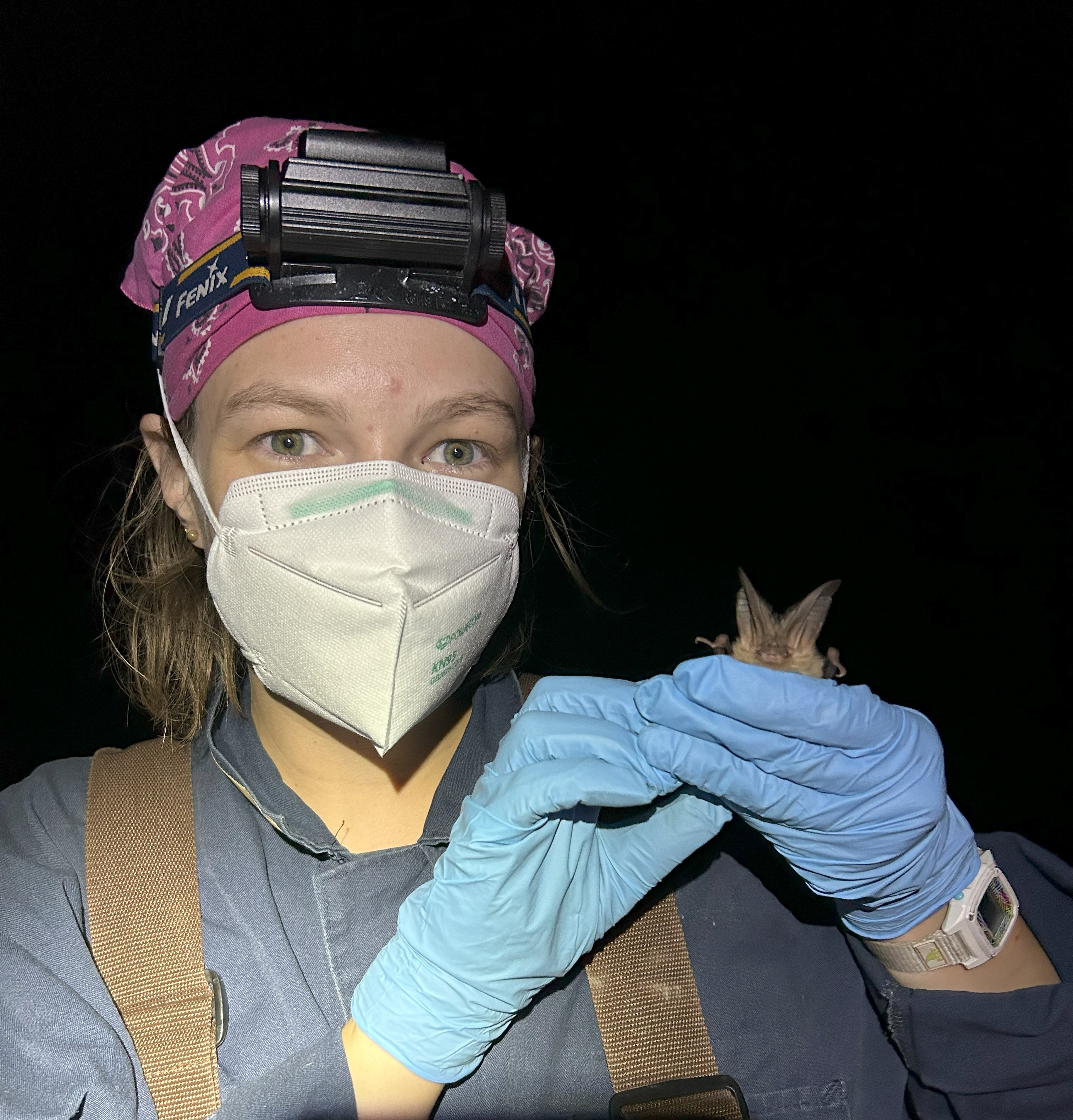
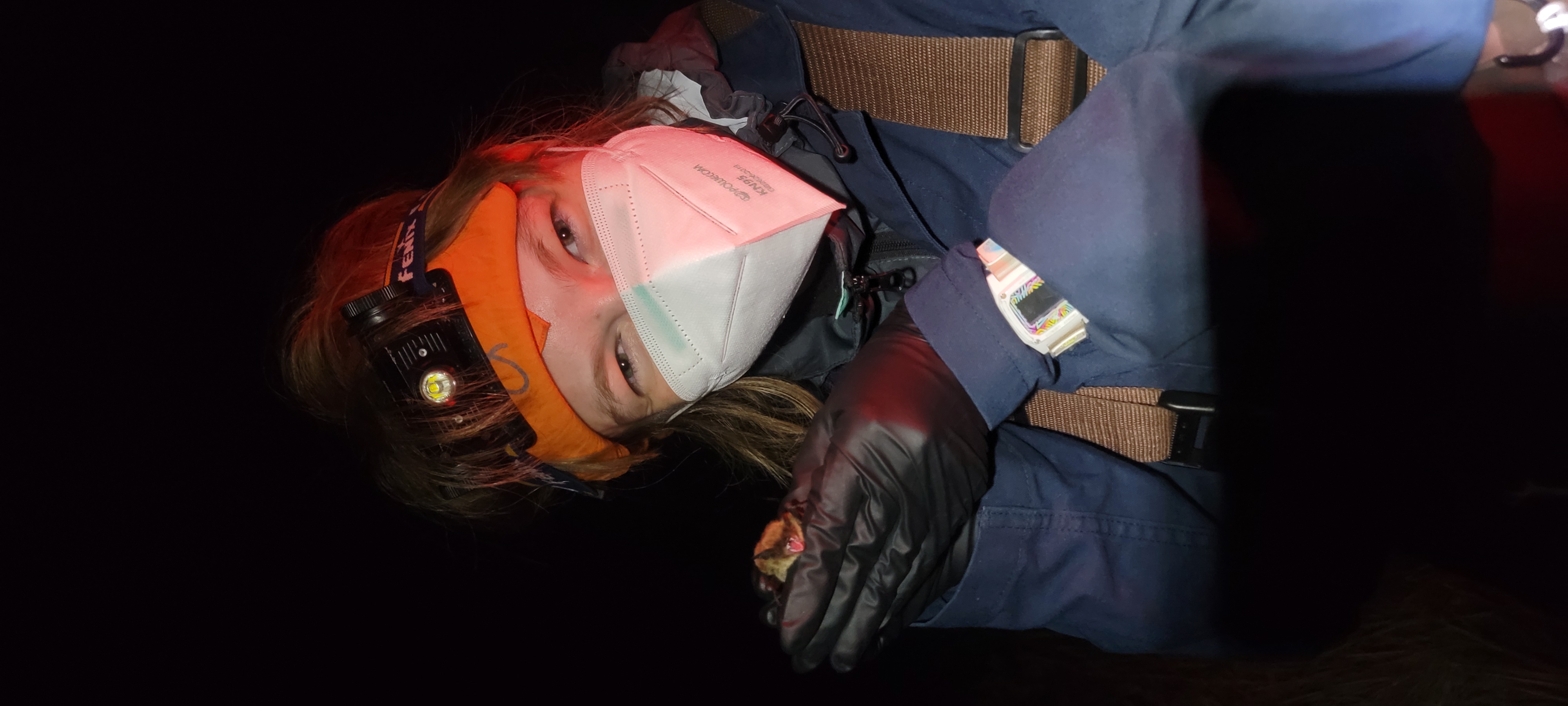
To monitor bat communities over time, I am using acoustic data collected in partnership with the National Park Service and the Northern Great Plains Network from 2015 – 2024. Beginning in 2022, my crew live captured bats and collected external parasites and fecal samples. The fecal samples were analyzed using DNA metabarcoding analysis to non-fatally identify internal parasites.
Why parasites? Parasites are an extraordinarily diverse group of organisms, with estimates suggesting they account for one-third to one-half of all species on Earth. Despite their global abundance and ecological influence, parasites are frequently overlooked in biological surveys, leaving major gaps in our knowledge of how they interact with their hosts. North American bats represent one host system warranting more focused parasite sampling efforts as information on the parasite communities of this group remains sparse. Bats already threatened by disease stressors (like WNS) may experience parasite loads as a comorbidity factor, but this is difficult to evaluate without a baseline understanding of what parasite communities are present, which host species they associate with, and how parasite burdens vary across individuals.
Share This Page
Research Highlights